By Chet Slater
You always remember your first Virtual Reality experience.
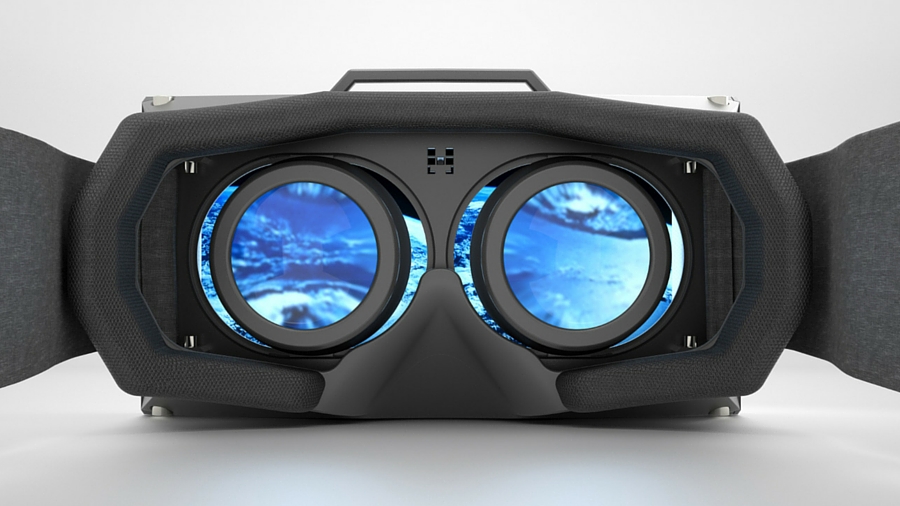
For me, it was a late night two years ago – my stomach was full of beer and Chinese food, and I’m struggling to manage the maze of wires connected to the Oculus Rift VR headset. Bathed in the white light of the computer screen, and the blue light of a humming fish tank, I put on the VR headset and was transported.
It was a thrill.
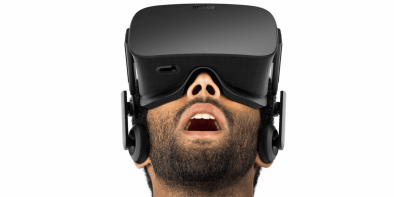
It was new, it was different, and you couldn’t ignore the sense that you stood at the precipice of a fundamental change in digital culture. A whole new level of immersion had been achieved, and a whole new set of expectations had been aroused.
This was two years ago, and as with most new technology, the honey moon phase reaches its climax and fades; those expectations which arose from such palpable optimism, now hang like wind chimes in the still and stagnant air, waiting for a summer breeze.
After almost daily use, the VR experience has proven to be limited in its breadth and variety, despite its penetrating first impressions. It’s difficult to say whether this lack of creative evolution is the result of technological limitations, or the lack of imagination on the behalf of content producers.
This was the topic of conversation I had recently with a friend of mine named Gary – a self-titled tech guru and big proponent of Virtual Reality. I found myself in Gary’s office one late Friday. We conversed at his desk, below a noisy air conditioner. A window behind us framed the dusky Los Angeles sun, sinking toward the horizon over Santa Monica.
Gary understood where I was coming from – that the hooks and gimmicks of VR were becoming a bit tired and predictable. We agreed, as did many of our colleagues, that its true potential was still a bright but far away object on the horizon.
What was going to come along to up-end the tea table?
“You can sum up all the experiences into a handful of types,” I explained. “Every new technology has its novelty, but after two and half years, I’ve grown pessimistic about what an ‘original experience’ could entail.”
Gary nodded as he stared into a yellow labeled coffee mug.
“The VR experiences are all the same. You’re always in first person. We’ve had other perspectives for years, why are we stuck in first person?” I muttered.
Gary noted that your traditional VR experience was in first person because it simply felt more natural and was also easier to produce.
I could see his point, but it was everything else in the VR experience that tended to show the strings.
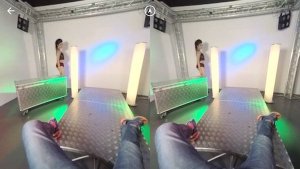
“Then the girl enters the scene, always with some ham-fisted exposition for why I’m just lying there. Then of course she takes her clothes off. You have your routine loop of various sexual acts and then it just kind of ends. That’s how it all is, “ I said, throwing up my hands.
Gary nodded his head in somber mutual agreement.
“I’m just tired of it.”
I noticed Gary had been unusually quiet since I entered his office. He put down the coffee mug on his desk and looked up.
“You’ve got to try something.”
He looked around the office and whispered:
“Have you ever tried a. . . VR game?”
Game?
I blushed. I’d heard things, but I wasn’t ready to admit to anything.
“You mean like psychosexual mind games?”
“No. A real game.”
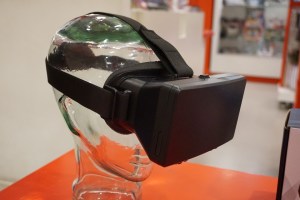
He already had a computer station set up and ready to go. I tried to get comfortable in a plush leather office chair as I dubiously fitted the Oculus Rift over my head. I didn’t know what to expect. He handed me a controller.
“What’s this for? “ I asked.
“For the game.”
I had used controllers before, but what purpose would it have in VR?
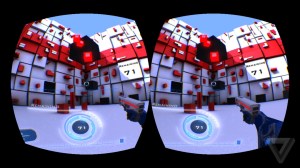
As the program started, some grating generic heavy-rock music began playing, instead of the usual generic soothing soft rock. Looking down at my virtual hands I noticed two thick, well-muscled arms gripping a black metal device.
“What’s that?” I asked.
“A machine gun.”
Why would I need a gun? I found myself in a darkened hallway with strange and wretched moans emitting from nearby. Several numbers were stuck on the upper right side of my field of view. I noticed a few dark figures were shambling toward me.
“When does the Innocent Coquette enter the scene?” I asked, attempting to find my bearings.
“There is no Innocent Coquette.”
At this point I realized I was completely out of my element. As the limping figures got closer my first instinct was to embrace them, but they started biting me with their green mouths and bloody teeth.
“What do I do?” I yelled, panicking.
“Shoot them with the gun!”
I was off to a poor start. Though I couldn’t say I was enjoying myself, I also couldn’t deny that this was something very different from your average VR experience.
Eventually, when I was able to wrap my head around the obligation of player control, and I got used to the total void of sexual tension, I began to form a sense of the games “rules”. I noticed my actions were directly influencing the numbers on the upper right corner – my “score” as Gary called it. I was shooting at these undead figures, and they would topple to the ground.
Admittedly, the display of violence was a bit hard to stomach.
“How does it end? “ I asked.
“When you beat the game. Or when you give up.”
Shooting an automatic weapon into the undead faces of my enemies certainly had a taboo allure, but was it healthy? Did it have the substance of your traditional VR experience?
Without any build-up of foreplay or awkward manifestations of lust, it just felt hollow.
When I removed the warm VR headset, I saw Gary standing by his computer, arms crossed.
“So what did you think?”
I wiped the perspiration from my forehead.
“Are there more of these…games?” I asked.
I didn’t want to completely downplay the experience, I even felt there was a seed of inspiration there, but I wanted to see more to better judge its potential.
“I’d have to look around,” he said.
“Have you shown this to anyone else?”
“A few people. They weren’t sure what to make of it. One guy loved it though, kept trying to better his score. He said he loved the survival aspect.”
This startled me.
Loved the survival aspect? But it completely lacked the narrative weight and bodily penetration of the expected VR experience.
That line stuck with me long after I left Gary’s office.
While I personally couldn’t see VR going in this “game” direction, I was happy it was there. I was happy someone was experimenting with the medium, even if it seemed to lose sight of the inherent VR promise. Experimentation like this is exactly what’s needed for this technology to improve and reach a greater audience.
For me, this “game” was a quaint and novel gimmick, but for some other innovative mind, it could be the seed to something greater, that improves upon the general “in out in out” formula which I’ve come to take for granted.
I saw a silver lining in the clouds, and I drove through the winding roads of LA with a renewed sense of optimism about the future of Virtual Reality.
Chet Slater is one of the leading authorities on the Virtual Reality industry. His ideas have influenced many tech companies looking to dip their toe into the VR pond. On his off time he functions mainly as a beekeeper, and collector of exotic gems.
 Mostly Disposable